
What Does the Panchmukhi Hanuman Idol Represent?
April 20, 2026
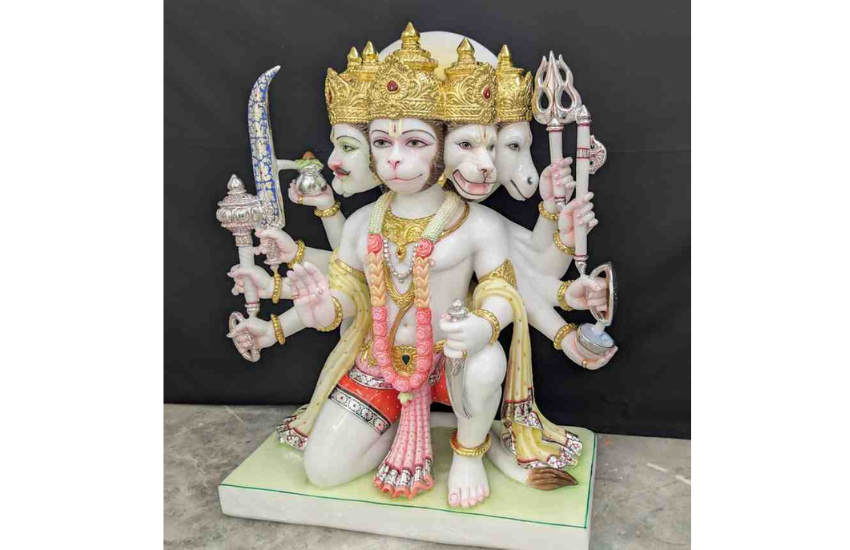
Panchmukhi Hanuman is one of the fiercest and powerful forms of Hanumanji, signifying protection against evil and negativity. Although we have seen many dedicated Panchamukhi Hanuman community temples and even small idols at home, many of us are still yet to know about the story behind this divine avatar and what the Panchmukhi Hanuman idol actually represents.
So, to help readers and the world know about the actual story behind Hanumanji’s Panchmukhi roopa, renowned sculptor Satya Narayan Pandey, known for his deep knowledge of Indian history and Hindu Puranas, shares his insights on the symbolism of the five-faced Hanuman murti, the spiritual meaning of each face, and the ancient tale that gave birth to this sacred form.
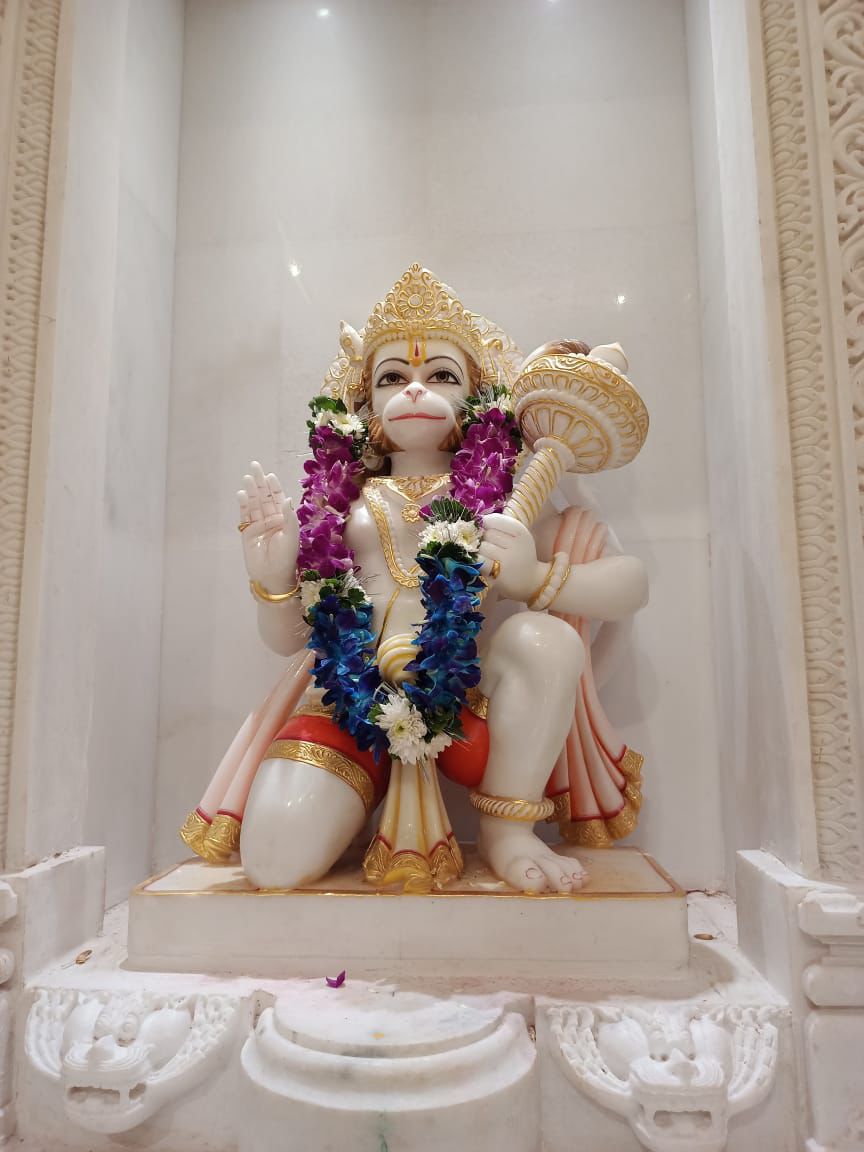 After a short but intense fight, Hanuman defeated Makardhwaja. However, he did not harm him. Instead, he admired the young warrior’s courage and sense of duty. After revealing the truth, Makardhwaja allowed Hanuman to pass.
Inside the dark kingdom, Lord Hanuman saw Lord Rama and Lakshmana bound by Ahiravana’s spells. The only way to defeat Ahiravana was to blow out five lamps burning in five different directions at the same time. Each lamp protected Ahiravana’s life. Hanuman then took the form of Panchmukhi Hanuman.
He had five faces - Hanuman, Narasimha, Garuda, Varaha, and Hayagriva. Each faced a different direction. With the Hanuman face, he looked east; with Narasimha, he faced south; with Garuda, he looked west; with Varaha, north; and with Hayagriva, upward. All five faces together blew out the lamps at once, ending Ahiravana’s life and freeing Rama and Lakshmana from the spell.
After a short but intense fight, Hanuman defeated Makardhwaja. However, he did not harm him. Instead, he admired the young warrior’s courage and sense of duty. After revealing the truth, Makardhwaja allowed Hanuman to pass.
Inside the dark kingdom, Lord Hanuman saw Lord Rama and Lakshmana bound by Ahiravana’s spells. The only way to defeat Ahiravana was to blow out five lamps burning in five different directions at the same time. Each lamp protected Ahiravana’s life. Hanuman then took the form of Panchmukhi Hanuman.
He had five faces - Hanuman, Narasimha, Garuda, Varaha, and Hayagriva. Each faced a different direction. With the Hanuman face, he looked east; with Narasimha, he faced south; with Garuda, he looked west; with Varaha, north; and with Hayagriva, upward. All five faces together blew out the lamps at once, ending Ahiravana’s life and freeing Rama and Lakshmana from the spell.
What is the Story of Panchmukhi Hanuman?
The story of Panchmukhi Hanuman is one of the most fascinating parts of the Ramayana. Panchmukhi means “five-faced,” and each of these faces has a deep reason and purpose connected to the protection of dharma and victory over evil. The story begins during the war between Lord Rama and the demon king Ravana. Ravana’s brother, Ahiravana, was a ruler of Pataal lok (netherworld). He wanted to help his brother win the war. One night, Ahiravana secretly entered Lord Rama and Lakshmana’s camp when everyone was asleep. Using his dark powers, he disguises himself as Vibhishana to take Rama and Lakshmana to his kingdom in Pataal to sacrifice them to Goddess Kali. When Hanumanji woke up and saw that Rama and Lakshmana were missing, he began searching everywhere. Soon, he learned from Vibhishana that Ahiravana had taken them to Pataal. Without any delay, Hanuman entered the Pataal lok through a secret path and reached Ahiravana’s palace. There he met Makardhwaja, who was guarding the gate. Makardhwaja did not know that Hanuman was his father, as he was born from a drop of Hanuman’s sweat that had fallen into the ocean and been swallowed by a Makara. A fierce battle began between them. Both were equally strong, but Hanuman was far more powerful and blessed with divine strength from Lord Rama.
After a short but intense fight, Hanuman defeated Makardhwaja. However, he did not harm him. Instead, he admired the young warrior’s courage and sense of duty. After revealing the truth, Makardhwaja allowed Hanuman to pass.
Inside the dark kingdom, Lord Hanuman saw Lord Rama and Lakshmana bound by Ahiravana’s spells. The only way to defeat Ahiravana was to blow out five lamps burning in five different directions at the same time. Each lamp protected Ahiravana’s life. Hanuman then took the form of Panchmukhi Hanuman.
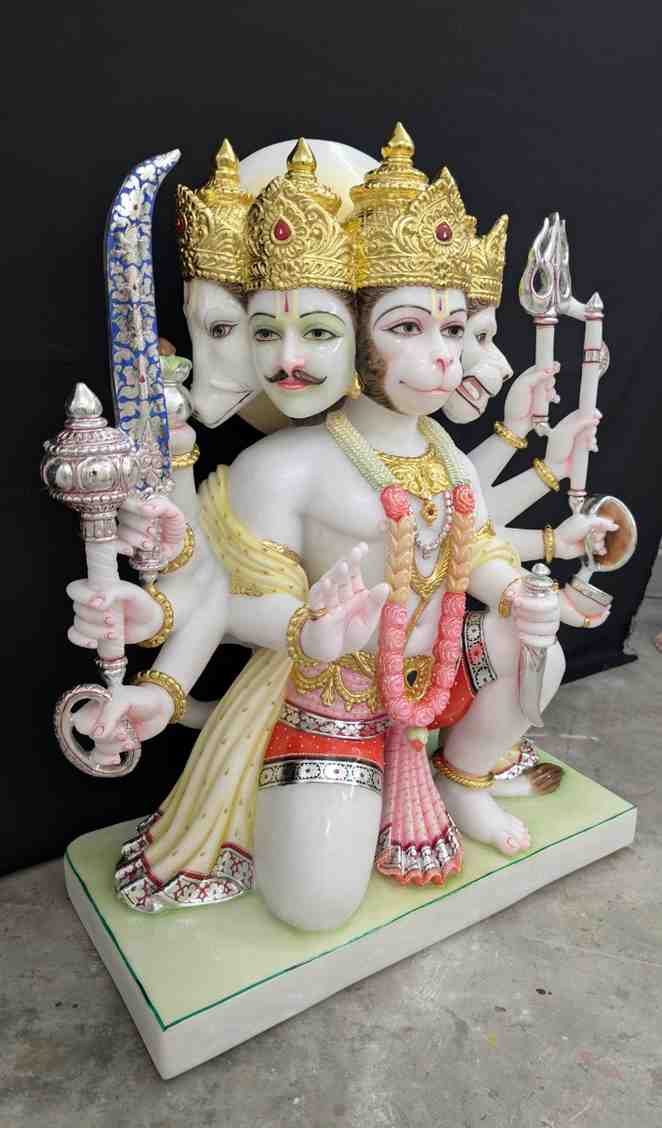
He had five faces - Hanuman, Narasimha, Garuda, Varaha, and Hayagriva. Each faced a different direction. With the Hanuman face, he looked east; with Narasimha, he faced south; with Garuda, he looked west; with Varaha, north; and with Hayagriva, upward. All five faces together blew out the lamps at once, ending Ahiravana’s life and freeing Rama and Lakshmana from the spell.
What is the Symbolism of Each Face of Panchmukhi Hanuman?
The Panchmukhi Hanuman idol is a powerful symbol of divine strength and protection. The term “Panchmukhi” means “five-faced,” and each face of the 5 mukhi Hanuman murti represents a unique form of divinity. These faces look in different directions, each holding deep spiritual meaning and energy. Let us understand the symbolism behind each one.1. Hanuman (East-Facing)
The first face of the Panchmukhi Hanuman statue is Hanumanji himself, facing the east. It stands for courage, devotion, and faith. This face reminds devotees of Hanumanji’s dedication toward Lord Rama and his fearless nature. Worshipping this face blesses one with strength and protection from fear and weakness.2. Narasimha (South-Facing)
The second face is Lord Narasimha, the half-lion and half-man avatar of Lord Vishnu, facing the south. This face represents protection from dark energies, fear, and injustice. In Hindu belief, the south direction is connected with Yama, the god of death. Narasimha’s fierce energy guards devotees from harm and drives away negative influences.3. Garuda (West-Facing)
The third face, facing west, is Garuda, the mighty bird who serves as Lord Vishnu’s vehicle. Garuda’s face in the Panchmukhi Hanuman moorti symbolizes freedom from poisons, both physical and spiritual. It protects one from snake bites, black magic, and harmful intentions.4. Varaha (North-Facing)
The fourth face is Varaha, the boar incarnation of Lord Vishnu, facing north. This face represents the power to uplift, restore, and protect the Earth. In the panchmukhi Hanuman idol, Varaha signifies the stability and strength needed to overcome obstacles.5. Hayagriva (Upward-Facing)
The fifth face, looking upward, is Hayagriva, the horse-headed form of Lord Vishnu. It symbolizes divine knowledge, intelligence, and spiritual understanding. Hayagriva is known as the source of wisdom and sacred learning. Through this face, the Panchmukhi Hanuman statue blesses devotees with clear thinking and the strength to follow the path of truth and learning.Significance of the Panchamukhi Hanuman Idol
The Panchmukhi Hanuman idol is worshipped for its strong protective energy. It is believed to guard against evil spirits, remove fear, and bring peace and courage wherever it is placed.In Temples and Community Places
In many temples and community centers, devotees can see large Panchmukhi Hanuman standing idols. These idols are placed facing the east, as that direction represents new beginnings and divine strength. Worshipping Hanumanji in this form is believed to grant courage to fight life’s difficulties and protect the community from unseen dangers.